
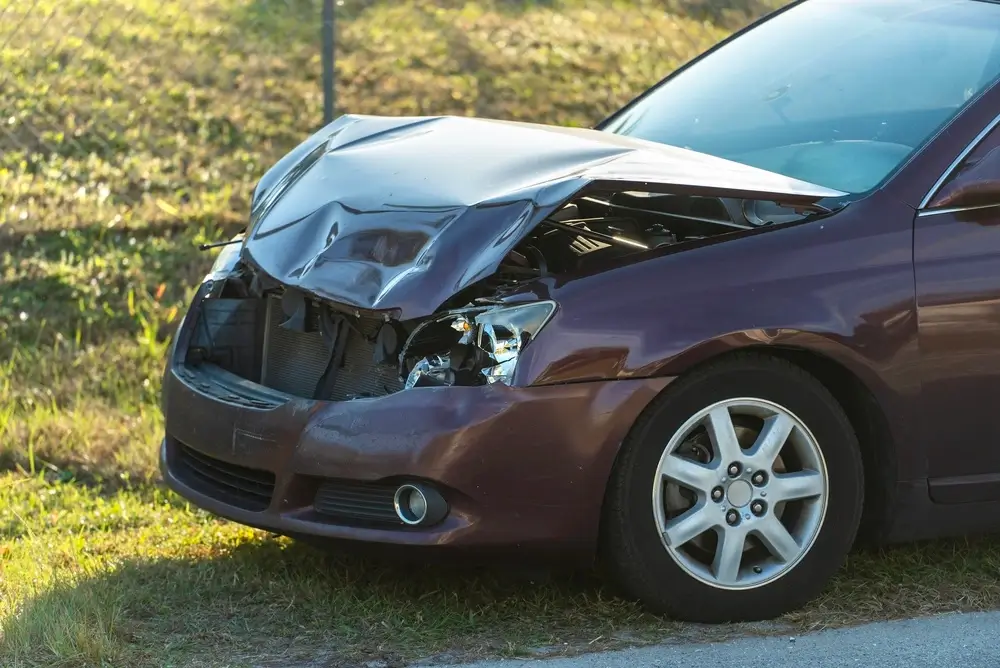
What Do Accident Benefits Cover in Ontario?
If you’ve ever been in a car accident, you know how quickly things can get overwhelming. Medical bills, time off work, and recovery all pile up fast. That’s exactly where accident benefits, Ontario coverage built into every auto insurance policy, steps in. Built into every standard auto insurance policy in the province, these auto insurance accident benefits support you financially and medically after a motor vehicle collision, regardless of who caused it.
This guide breaks down what’s covered, what’s optional, and what’s changing as of July 1, 2026, so you can make informed decisions about your policy.
What Are Accident Benefits in Ontario?
Accident benefits coverage is a form of no-fault financial and medical support built into your auto insurance policy. “No-fault” simply means you deal directly with your own insurance company after a collision, regardless of who was responsible for causing it.
These benefits apply broadly. Drivers, passengers, cyclists, and even pedestrians involved in a motor vehicle accident can qualify, making them one of the most practical parts of your auto insurance coverage. Whether you’re the driver who caused the accident or a bystander who got caught in it, your own insurer handles your claim.
One important step to keep in mind: you must notify your insurer within 7 days of an accident and submit the required application forms to start receiving benefits. Missing that window can delay or affect your access to support.
Statutory Accident Benefits: The Foundation of Your Coverage
Statutory accident benefits coverage includes the mandatory protections built into every Ontario auto insurance policy. They’re governed by the statutory accident benefits schedule under the Insurance Act and set the baseline for what all insurers must provide after a collision.
Think of them as the floor, not the ceiling. You can build on top of them with optional benefits, but every driver in Ontario starts with the same standard protections. These benefits exist specifically to make sure that no one who is injured in an auto accident is left without financial support or income replacement assistance while they recover.
Mandatory Accident Benefits You Already Have
Medical, Rehabilitation, and Attendant Care Benefits
Medical and rehabilitation benefits, including supplementary medical care, are mandatory coverage in every Ontario auto insurance policy. These cover costs that the Ontario Health Insurance Plan (OHIP)doesn’t, including physiotherapy, prescriptions, chiropractic treatment, and counselling after a car accident.
The coverage limits depend on how serious your injuries are:
- Minor injuries (as defined by the minor injury guideline): up to $3,500
- Non-catastrophic injuries: up to $65,000
- Catastrophic injuries: up to $1,000,000
Attendant care benefits fall under this umbrella as well. If your injuries require someone to assist you with daily activities at home or in a healthcare facility, this coverage helps pay for that medical care. For example, if you’re recovering from a serious collision and need help bathing, dressing, or moving around your home, attendant care benefits cover the cost of hiring someone to provide that assistance.
The funds are meant for reasonable and necessary expenses incurred during your recovery and tied directly to your injuries. They’re not a blank cheque, but they do cover the genuine costs of getting better after injuries sustained in an accident.
Death and Funeral Benefits
If someone covered under your policy, including the named insured’s spouse, dies as a result of an auto accident, death benefits provide a lump sum payout to their family and dependents. Standard coverage includes $25,000 for a spouse and $10,000 for each dependent.
You can increase these limits through optional upgrades. The enhanced death benefit can reach $50,000 for a spouse and $20,000 for dependents, which can make a meaningful difference for a family managing the financial aftermath of losing someone.
Funeral benefits help cover funeral costs when a covered person passes away due to a car accident. The standard amount is $6,000, which can be increased to $8,000 with optional coverage. While no amount of money makes up for a loss like that, funeral benefits reduce the financial burden during an already difficult time.
What’s Changing on July 1, 2026
This is an important update, especially if you haven’t reviewed your policy recently. As of July 1, 2026, several benefits that are currently mandatory will become optional under Ontario’s auto insurance policies. That means policyholders will need to actively choose whether to include them rather than receive them automatically.
The benefits of moving from mandatory to optional include:
- Income Replacement Benefits
- Non-Earner Benefits
- Caregiver Benefits
This change affects how you should think about your existing coverage. If you’ve always assumed these other accident benefits were part of your standard auto insurance because they used to be mandatory, they may no longer be included after that date unless you take action. Reviewing your policy before July 2026 is strongly recommended.
Income Replacement and Non-Earner Benefits
How Income Replacement Works
If a car accident leaves you unable to work, income replacement benefits can cover up to 70% of your gross income, to a maximum of $400 per week under the standard plan. For many working Ontarians, $400 per week is well below their actual earnings, which is exactly why optional upgrades exist to increase that ceiling to $1,000 per week.
To put that in perspective: if you earn $1,200 per week and are off work for two months recovering from an accident, the standard benefit would cover $400 of that weekly shortfall. Upgrading your coverage before an accident occurs could significantly reduce financial stress during recovery.
Because this benefit is becoming optional in July 2026, it’s worth asking yourself whether you’d be financially stable without it or any other income replacement assistance if you were injured and off work for several weeks or longer.
Non-Earner Benefits
Not everyone qualifies for income replacement. If you’re a student, a retiree, or someone who doesn’t earn employment income, you may be eligible for non-earner benefits instead. These provide $185 per week if your injuries prevent you from carrying on a normal life as a result of the accident.
For example, a full-time student injured in an automobile accident at the time of the accident who can no longer attend classes or manage daily activities may qualify for non-earner benefits even though they have no employment income to replace.
Like income replacement, non-earner benefits are moving to optional status in July 2026, so this is a coverage decision you’ll need to make proactively.
Caregiver Benefits: Who They’re For
Caregiver benefits address a situation that’s easy to overlook when you’re shopping for auto insurance, but very real when an accident happens. If you’re injured in an auto accident and can no longer provide care for a household member who depends on you, such as a young child or an aging parent, caregiver benefits help reimburse the cost of hiring someone to step in while you recover.
For instance, if you’re the primary caregiver for a parent with limited mobility and a car accident leaves you bedridden for six weeks, caregiver benefits would help cover the cost of bringing in a professional caregiver during that time.
As of July 1, 2026, caregiver benefits will also become optional. If this type of coverage matters to your situation, now is the time to make sure it’s included in your policy before the change takes effect.
Optional Accident Benefits Worth Considering
When you add optional benefits or purchase optional coverage, you build on your standard accident benefits to better match your lifestyle and financial needs. Here’s a breakdown of what you can add to your policy:
- Increased medical and rehabilitation limits beyond the standard $65,000 or $1,000,000 thresholds, giving you more room for extended treatment after serious injuries
- Increased income replacement up to $1,000 per week for higher-income earners who need more than the standard benefit
- Housekeeping and home maintenance coverage for reasonable expenses you can no longer manage yourself, such as lawn care or cleaning services during recovery
- Lost educational expenses, including lost tuition and other education-related expenses, if an injury forces you to withdraw from a program mid-semester
- Additional childcare expenses beyond what’s covered under caregiver benefits
- Expenses of visitors for family or friends who travel to see you while you’re hospitalized or in a rehabilitation facility
- Indexation benefit, which applies an annual adjustment for inflation to certain accident benefits based on the Consumer Price Index for Canada, so your coverage doesn’t lose value over time.
- Coverage for personal medical devices and other personal medical devices damaged in the accident, including hearing aids and other essential equipment
- Increased death and funeral benefits, raising the payout to $50,000 for a spouse, $20,000 for dependents, and $8,000 for funeral expenses
Optional upgrades can meaningfully strengthen your protection. Discussing them with an insurance representative at renewal time is a straightforward way to make sure your coverage reflects your actual life.
How Coverage Limits Are Structured by Injury Type
Understanding how benefit limits work helps you plan. Ontario organizes accident benefit limits around three categories of injury severity.
Minor Injuries
Under the minor injury guideline, coverage for medical and rehabilitation benefits is capped at $3,500. This applies to sprains, strains, whiplash-associated disorders, and similar soft-tissue injuries. For many fender-bender accidents, this is the tier that applies.
Non-Catastrophic Injuries
If your injuries are more serious but don’t meet the legal threshold for catastrophic impairment, you fall into the non-catastrophic category, and your insurance carrier will assess your claim accordingly. Here, the standard combined limit for medical, rehabilitation, and attendant care is $65,000.
Catastrophic Injuries
Catastrophic impairment is a defined legal term under Ontario’s Insurance Act. It includes conditions such as paraplegia, quadriplegia, severe brain injuries, and loss of vision. If your injuries qualify, your coverage increases significantly, up to $1,000,000 for medical and rehabilitation benefits. This higher limit exists because catastrophic injuries often require years of ongoing treatment, specialized equipment, and long-term attendant care.
What Accident Benefits Don’t Cover
Accident benefits coverage works alongside your private benefits plan or group health coverage, not instead of it. If you have existing coverage through an employer’s private health plan, your insurer will typically coordinate with that plan when processing your claims.
It’s also worth being clear that accident benefits don’t cover damage to your vehicle or other property. That’s handled by separate parts of your auto insurance policy, such as collision or comprehensive coverage. Accident benefits are specifically about your physical recovery and financial stability after an auto accident, not the repair of your car.
A Quick Summary of Standard vs. Optional Coverage
To put everything in one place:
What’s included as standard:
- Medical, rehabilitation, and attendant care benefits
- Death and funeral benefits
What’s becoming optional as of July 1, 2026:
- Income replacement benefits
- Non-earner benefits
- Caregiver benefits
What you can add through optional coverage:
- Higher benefit limits
- Indexation
- Housekeeping and home maintenance
- Lost educational expenses
- Visitor expenses
- Enhanced death and funeral payouts
- Coverage for damaged personal medical devices
Ready to Review Your Coverage?
With changes taking effect in July 2026, now is a practical time to sit down and look at what your current policy actually includes. Benefits that were once automatic under your insured automobile’s policy may soon require a deliberate choice on your part.
At McDougall Insurance, our advisors can walk you through your statutory accident benefits, explain what’s changing, and help you decide which optional benefits make sense for your situation and budget.
Contact a McDougall Insurance advisor today to review your auto insurance coverage and make sure you’re protected where it counts.
Checkout:
- What Are the Ontario Insurance Changes Taking Effect in July 2026?
- Mandatory vs Optional Accident Benefits Ontario: Whats the Difference?
- What Does Ontario Auto Insurance Reform 2026 Mean for You?
- What Happens to Your Insurance Policy After July 1, 2026?
- What Happens If You Don’t Have Enough Coverage After the Reform?
- How to Choose the Right Auto Insurance Coverage After Ontario Reform
- Will Auto Insurance Be Cheaper After Ontario Reform?
- Who Should NOT Opt Out of Accident Benefits (Ontario Guide)
- What Do Accident Benefits Cover in Ontario?
Accident Benefits Ontario Coverage – FAQs
Who qualifies for accident benefits in Ontario?
Anyone involved in a motor vehicle accident in Ontario can qualify, including drivers, passengers, cyclists, and pedestrians. Fault doesn’t matter; you deal directly with your own insurer.
What happens if I don’t report my accident to my insurer on time?
You must notify your insurer within 7 days and submit the required forms. Delays can affect your ability to receive benefits, so reporting promptly is important.
Are income replacement benefits based on my full salary?
No. The standard benefit covers up to 70% of your gross income, with a weekly cap of $400. Optional coverage can raise that limit to $1,000 per week.
What counts as a catastrophic injury under Ontario law?
Catastrophic impairment is a legal definition under the Insurance Act and includes conditions such as paraplegia, severe brain injury, and blindness. These injuries qualify for the highest benefit limits available.
Can I receive attendant care benefits if I recover at home?
Yes. Attendant care benefits apply whether you’re recovering at home, in a rehabilitation centre, or in another healthcare facility.
What’s the difference between medical rehabilitation benefits and attendant care benefits?
Medical and rehabilitation benefits cover treatment costs like physiotherapy and prescriptions. Attendant care benefits specifically cover the cost of someone who helps you with personal daily tasks because of your injuries.
Will caregiver benefits still be automatic after July 2026?
No. As of July 1, 2026, caregiver benefits become optional. You’ll need to add them to your policy if you want this protection going forward.
What is the indexation benefit, and do I need it?
The indexation benefit adjusts certain accident benefits annually based on the Consumer Price Index, keeping your coverage in line with inflation. It’s worth considering if you want your benefits to hold their value over time.
Do accident benefits cover lost tuition if I have to drop out due to my injuries?
Only if you’ve added optional coverage for lost educational expenses. This isn’t part of the standard accident benefits package.
What if I don’t earn employment income? Am I still covered for financial loss?
You may qualify for non-earner benefits, which provide $185 per week if your injuries prevent you from carrying on a normal life. This benefit is available to those who don’t qualify for income replacement.

You Might Want to Read

September 14, 2026
Welcome UnitedLink Insurance to the McDougall Team!
July 8, 2026
What Do Accident Benefits Cover in Ontario?

July 8, 2026
Who Should NOT Opt Out of Accident Benefits (Ontario Guide)