
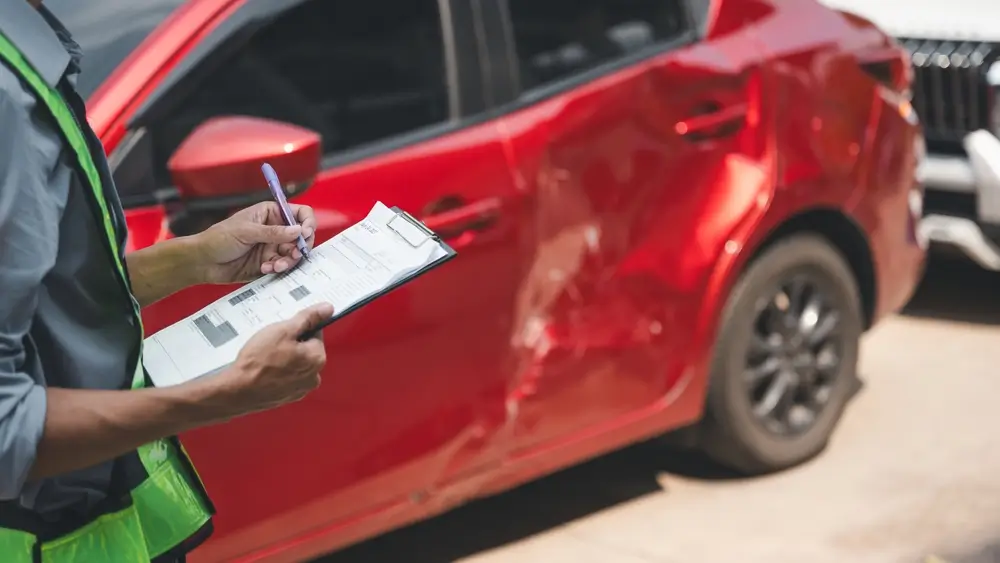
How a Car Insurance Claim Affects Your Insurance in Ontario
Getting into a car accident is stressful enough on its own. But for many Ontario drivers, the anxiety doesn’t end at the roadside; it follows them home and lingers through every insurance renewal. Will your premium skyrocket? Will your insurer drop you? How long will this accident follow you? These are fair questions, and the good news is that understanding the system makes a real difference in how you navigate what comes next.
Whether you were recently involved in a car accident or you’re simply trying to be prepared, this guide walks you through what happens to your car insurance after claim, Ontario, from fault determination and premium impacts to accident benefits and smart strategies to protect your wallet.
What is Ontario’s No-Fault Insurance System?
Before diving into what happens after a claim, it’s important to understand one foundational concept: Ontario operates under a no-fault insurance system. Despite the name, this doesn’t mean nobody gets blamed. It simply means you deal with your own insurance company for repairs and accident benefits, regardless of who caused the accident.
Under this framework, your own insurer provides compensation for your injuries and vehicle damage after a car accident. That means no chasing the other driver’s insurance company, and no waiting for blame to be officially assigned before you can start receiving support. The system was introduced in Ontario in 1990, specifically to speed up the claims process and reduce legal disputes.
That said, fault is absolutely still determined; it just happens behind the scenes, between insurers, and it very much affects your premiums going forward. So while no-fault simplifies the claims experience for drivers, it does not eliminate the consequences of being at fault for an accident.
How Fault Is Determined in Ontario
When a car accident happens in Ontario, your insurance company determines fault by applying the provincial Fault Determination Rules (FDR) established under the Insurance Act. These rules use a set of over 40 illustrated scenarios covering nearly every type of road collision imaginable, including rear-end impacts, merging incidents, left turns, backing collisions, and more.
Fault is assigned as a percentage, typically in increments of 0%, 25%, 50%, 75%, or 100%. Importantly, the FDR applies regardless of road or weather conditions, visibility, point of impact, or the actions of pedestrians. The rules focus purely on the accident scenario itself.
To determine fault, your insurance company reviews a combination of evidence: driver statements, photographs, police reports, witness statements, and dashcam footage. It’s worth noting that being charged with a traffic offence doesn’t automatically mean you’ll be found at fault under the FDR, and conversely, not being charged doesn’t mean you’ll be cleared. The insurance fault determination is a separate process from any legal proceedings.
If you disagree with your insurer’s fault determination, you have the right to challenge it. You can ask your claims adjuster which specific FDR scenario was applied, submit additional evidence like dashcam footage or independent witness statements, and formally escalate the dispute through your insurer’s complaint process.
What Happens to Your Car Insurance Premiums After a Claim?
Here’s the part most Ontario drivers are most concerned about: the impact on your car insurance premiums. The answer depends heavily on how much fault is assigned to you.
If you’re found 0% at fault, your premiums generally will not increase as a result of the accident. However, it’s worth knowing that even a not-at-fault accident will typically appear on your insurance record, and in some cases, it could affect claims-free discounts you were previously enjoying.
If you’re found partially at fault, say 25% or 50%, the impact on your premiums will depend on your insurer and your overall driving history. A partial fault can still trigger a surcharge at renewal, especially if you have other marks on your insurance record.
If you’re found 50% or more at fault, you should expect your car insurance premiums to increase at renewal. The typical range for at-fault accidents in Ontario is a premium increase of 20% to 50%, though it can reach 100% or higher for high-risk drivers or those with multiple prior at-fault losses. That increase usually hits hardest in the first 24 to 36 months after your policy renews, and can remain on your driving record for up to six years.
The most significant financial impact generally occurs in the first two to three years following an at-fault accident. After that period, if you maintain a clean driving record, the surcharge may begin to taper.
Multiple at-fault accidents can lead to even steeper consequences, like higher deductibles, reduced insurance coverage options, or difficulty renewing your policy altogether. This is why avoiding subsequent incidents in the years following an insurance claim is so important.
The Claims Process: What to Do After a Car Accident
Knowing what steps to take immediately after an auto accident can make the entire claims process smoother and protect your benefits. Here’s what Ontario drivers need to do:
Step 1: Exchange information and document the scene. After ensuring everyone’s safety, exchange names, contact details, and insurance policy information with any other driver involved. Take photographs of vehicle damage, road conditions, and the surrounding area. If there are any witnesses, try to collect their contact information as well.
Step 2: File a police report if necessary. If there are injuries or significant vehicle damage, a police report is important and may be legally required. Even in situations where it isn’t mandatory, a police report can serve as valuable documentation during the claims process.
Step 3: Notify your insurer within seven days. In Ontario, you are legally required to notify your own auto insurance company within seven days of an auto accident. This is not a soft deadline; delays in reporting can put your accident benefits at risk. Reporting sooner is always better.
Step 4: Receive and submit your claim forms. Once you report the accident, your insurance agent or claims adjuster will provide you with claim forms. Complete these accurately and promptly. If you have injuries, your accident benefits forms must be submitted within 30 days of notifying your insurer. Missing these timelines can have serious consequences for your entitlement to benefits.
Step 5: Vehicle inspection and repair. Your insurer will inspect the damage to your vehicle. If it can be repaired, you’ll typically be directed to a repair shop, and you’ll be responsible for paying your deductible, either directly to the shop or deducted from your settlement. If the cost of repairs approaches or exceeds your vehicle’s Actual Cash Value (ACV), your insurer may declare it a total loss (commonly called a write-off) and pay you the vehicle’s ACV instead.
What is Accident Benefits Coverage in Ontario?
One of the most underutilized aspects of Ontario’s auto insurance system is the robust set of accident benefits available to injured drivers, and in many cases, passengers and pedestrians too. These are called Statutory Accident Benefits (SABS), and they apply regardless of who was at fault for the accident.
In Ontario, you may qualify for accident benefits that include:
- Medical and rehabilitation benefits — covering treatments, prescription drugs, rehabilitation programs, and assistive devices
- Income replacement benefits — providing compensation if your injuries prevent you from working
- Non-earner benefits — for those who don’t qualify for income replacement but suffer a complete inability to carry on a normal life
- Attendant care benefits — for those who require personal assistance due to severe injuries
- Death and funeral benefits — lump-sum payments to family members in the event of a fatal accident
As of January 2024, the standard medical and rehabilitation benefit for non-catastrophic injuries increased from $65,000 to $80,000, giving more support to those recovering from serious but non-catastrophic harm. For injuries meeting the definition of “catastrophic impairment,” the benefit ceiling reaches up to $1 million.
Understanding your full accident benefits can help ensure you don’t miss out on compensation you’re entitled to. If you have injuries from an accident, it’s worth connecting with your insurer and, depending on the severity, potentially consulting a legal professional to ensure nothing falls through the cracks.
A Major Update for Ontario Drivers: July 1, 2026 SABS Changes
Starting July 1, 2026, Ontario is implementing one of the biggest overhauls to its automobile insurance accident benefits regime in decades, with the Statutory Accident Benefits Schedule (SABS) being amended under Regulation 383/24.
The most significant shift is this: many benefits that were previously included automatically in every auto policy will now only apply if the policyholder actively purchases them. All benefits will become optional except Medical, Rehabilitation, and Attendant Care Benefits, which remain mandatory. That means protections Ontario drivers have long taken for granted, like income replacement benefits, non-earner benefits, caregiver benefits, death benefits, funeral expenses, housekeeping and home maintenance benefits, and visitors’ expenses, will no longer be included by default.
If your policy renews on or after July 1, 2026, you will automatically keep your existing benefits unless you opt out in writing, but new policies will only include the bare minimums. Opting out of optional benefits typically saves only about 5% on premiums, which amounts to a few dollars a month, but can result in losing tens of thousands of dollars in support after a crash.
The bottom line: before your next renewal, review your policy carefully and speak with your insurance broker about which optional benefits make sense for your situation. This is not a change to ignore.
Accident Forgiveness: A Safety Net Worth Having
One of the most valuable optional coverages for Ontario drivers is accident forgiveness, and it’s one that many people only wish they had after an accident, not before.
Accident forgiveness is an optional coverage endorsement that prevents your car insurance premium from increasing after your first at-fault accident, provided you meet the eligibility criteria. Most insurers require you to have a clean driving history, often accident-free for several consecutive years, before they’ll extend this protection.
There are a few critical things to understand about accident forgiveness:
- It does not erase the accident from your insurance record. The incident still appears in your history; it simply prevents your premium from rising with your current insurer.
- It must be purchased before an accident occurs. You cannot add accident forgiveness to your policy after a claim has been filed.
- It may not transfer if you switch insurers. If you move to a new insurance company, the forgiven accident may still appear on your insurance record and could be factored into your new premium.
- If you are assigned less than 25% fault for a collision, Ontario insurers are not permitted to use it against you when setting your rate, so accident forgiveness may not be necessary in shared-fault situations where your role was minimal.
Accident forgiveness is particularly valuable for drivers who have maintained a long, clean driving history and want protection against a single mistake wiping out their premium advantage. It’s also company-specific, meaning the terms and eligibility vary between insurers, so it’s worth discussing with your insurance agent or broker to understand exactly what you’d be getting.
What is the Minor Accident Exception?
Not every fender-bender has to follow you through your renewal. Ontario has specific provisions around minor accidents that, under the right circumstances, won’t affect your insurance premium.
If an accident causes less than $5,000 in total damage and results in no injuries, and you choose to pay for the repairs out of pocket rather than going through your insurer, it generally cannot be used to increase your premiums. This can be a smart financial calculation in some situations, especially if the damage is modest and you want to protect a clean insurance record.
However, this exception applies under specific conditions, and there are limits to how often this protection applies. If you’re considering this route, it’s best to speak with your insurance agent before making any decisions to ensure you understand the full implications.
How Long Does an At-Fault Accident Stay on Your Record?
An at-fault accident can remain on your driving record and influence your car insurance premiums for several years. In Ontario, the typical window is three to six years, with the heaviest premium impact felt in the first two to three years following the incident.
The clock starts from the date of the accident, not the date of the claim. So even if your insurer takes time to formally process the fault determination, the timeline for the accident’s effect on your record begins when it occurred.
During this period, the best thing you can do is maintain a clean driving history with no additional at-fault accidents, no major traffic convictions, and continuous coverage. Rebuilding your insurance record takes time, but consistent safe driving is the most reliable path to lower premiums over the long run.
How to Lower Your Premiums After a Claim
If you’ve been in an at-fault accident and are facing higher insurance rates, you’re not without options. Here are several strategies that can help manage the cost:
Shop around. Different insurance companies assess risk differently. Your current insurer might apply a steep surcharge, while another company might quote a more competitive rate, even with the at-fault accident on your record. Comparing quotes from multiple insurers is always worthwhile, especially at renewal.
Increase your deductible. Opting for a higher deductible lowers your monthly or annual premium. Just make sure the deductible amount is something you could realistically cover out of pocket if needed.
Bundle your policies. Holding both your home and auto insurance with the same company typically results in a discount, which can help offset premium increases after a claim. Bundling can save anywhere from 10% to 30% on your premiums with some providers.
Complete a defensive driving course. Some Ontario insurers offer discounts to drivers who complete approved driver training programs. It won’t undo an at-fault accident, but it demonstrates a commitment to safe driving and may earn you a reduced rate.
Use usage-based insurance (UBI). Many insurers offer programs that track your driving habits through an app or device and adjust your premium based on how you actually drive. If you’re a safe, low-mileage driver, this can lead to meaningful savings.
Maintain continuous coverage. Gaps in your insurance history can work against you when getting quoted. Keeping active coverage, even when driving less, helps you maintain an uninterrupted insurance record.
Direct Compensation – Property Damage (DC-PD): What You Should Know
Ontario’s insurance landscape includes a coverage called Direct Compensation – Property Damage (DCPD), which typically applies when you are not at fault for an accident. It covers damage to your vehicle, certain contents, and loss of use, and you receive this compensation from your own insurer, not the at-fault driver’s.
One important update: as of January 2024, Ontario drivers are permitted to opt out of DCPD coverage in their policy. While doing so reduces your premium, it also means that if you’re in a not-at-fault accident, you would need to cover vehicle repair costs out of pocket (unless you carry collision coverage). If the at-fault vehicle is unidentified, such as in a hit-and-run, DCPD may not apply regardless.
For most drivers, keeping DCPD coverage is the prudent choice, but it’s worth discussing with your insurance agent to understand how it interacts with the rest of your policy.
Checkout:
- Young Drivers Insurances
- Experienced Drivers Insurance
- Do Males Pay More Than Females On Car Insurance?
- Careless Driving in Ontario
- High risk driver insurance
- The Ideal Height and Weight to Sit in Front Seat -Ontario Full Guide
- Stunt Driving in Ontario Everything You Need to Know
- Car safety certificate Ontario – Safety Inspection | Ultimate Guide
- A Full Guide to Temporary Car Insurance – Ontario
- Do I Need To List A G1 Driver On My Insurance Policy?
- Car Tag Tracking Systems in Ontario
- How to Transfer Vehicle Ownership in Ontario?
- How a Car Insurance Claim Affects Your Insurance in Ontario
- Newcomer Car Insurance Ontario Guide: Lower Your Premiums Faster
- Broker vs Direct Car Insurance Ontario: Which Is Better?
Final Thoughts
Dealing with car insurance after a claim in Ontario doesn’t have to be overwhelming, but it does require understanding how the system works. Fault determination under the FDR sets the foundation for how your premiums will be affected. Your accident benefits are there to support you regardless of fault, provided you notify your insurer promptly and submit the right forms on time. And smart choices, like carrying accident forgiveness before an accident happens, shopping around at renewal, and maintaining a clean record going forward, can meaningfully reduce the long-term impact on your wallet.
If you have questions about your coverage, your options after a recent claim, or how to protect yourself before an accident occurs, speaking with an experienced insurance broker is one of the best steps you can take. At McDougall Insurance, we’re here to help Ontario drivers understand their auto insurance policies and make informed decisions, before, during, and after a claim.
Contact us today for a free consultation. Our team is ready to review your current coverage, explain your options, and help you find the right protection for whatever comes next on the road.

You Might Want to Read
September 14, 2026
Welcome UnitedLink Insurance to the McDougall Team!
July 8, 2026
What Do Accident Benefits Cover in Ontario?

July 8, 2026
Who Should NOT Opt Out of Accident Benefits (Ontario Guide)